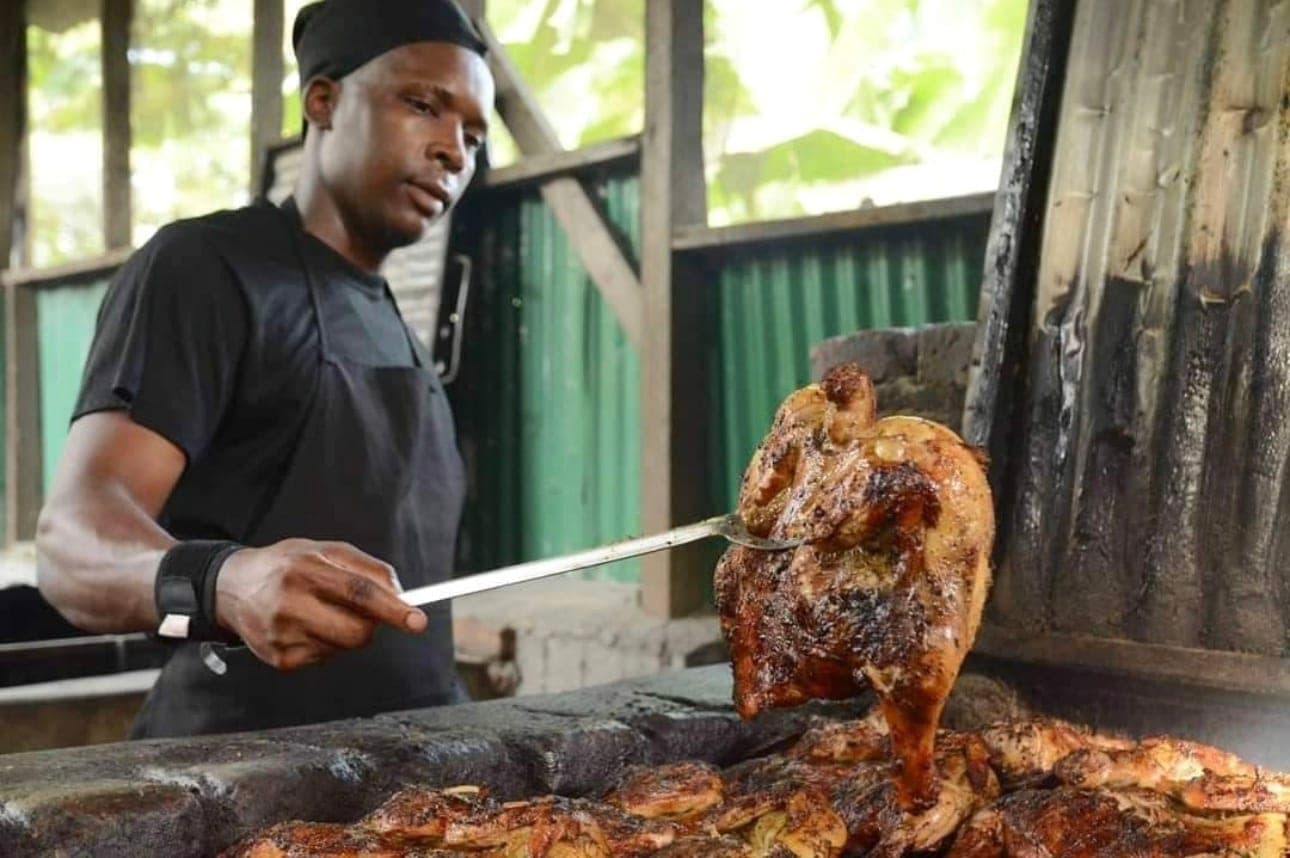
Jerk did not start as a flavour you buy in a bottle. It started as a way to cook meat so it would keep, developed by the Maroons — communities of escaped and freed Africans who held the Jamaican interior against the British for generations.
The method is the point: the meat is rubbed with a seasoning built on Scotch bonnet pepper, pimento (allspice), thyme, scallion and salt, then cooked slowly over pimento wood rather than fast over flame. The wood is not optional. It is where a large part of the taste comes from, and it is the first thing missing from jerk cooked anywhere else in the world.
Around Montego Bay the test of a jerk spot is simple. Look for the smoke, look for the wood, and look for the drum pan or the long covered pit. If the chicken comes out pale and sauced, you are eating barbecue with a Jamaican label on it.
Order the way regulars do: a quarter or a half chicken, chopped through the bone with a cleaver, on paper, with festival — a slightly sweet fried dumpling — or hard dough bread to carry the heat. Pork if they have it. Ask for the sauce on the side the first time, then decide.
Scotchies, out on the road towards Ironshore, is the one most visitors are pointed at, and it earns it — open pits, pimento wood, and the smoke visible from the road. It is far from the only one. The jerk pan that sets up on a roadside at six in the evening, with a line of people from the neighbourhood already waiting, is usually the better eat.
Know this place better than we do?
Corrections welcome, and always credited. If you run a business in the story, claim your listing.
Add your business