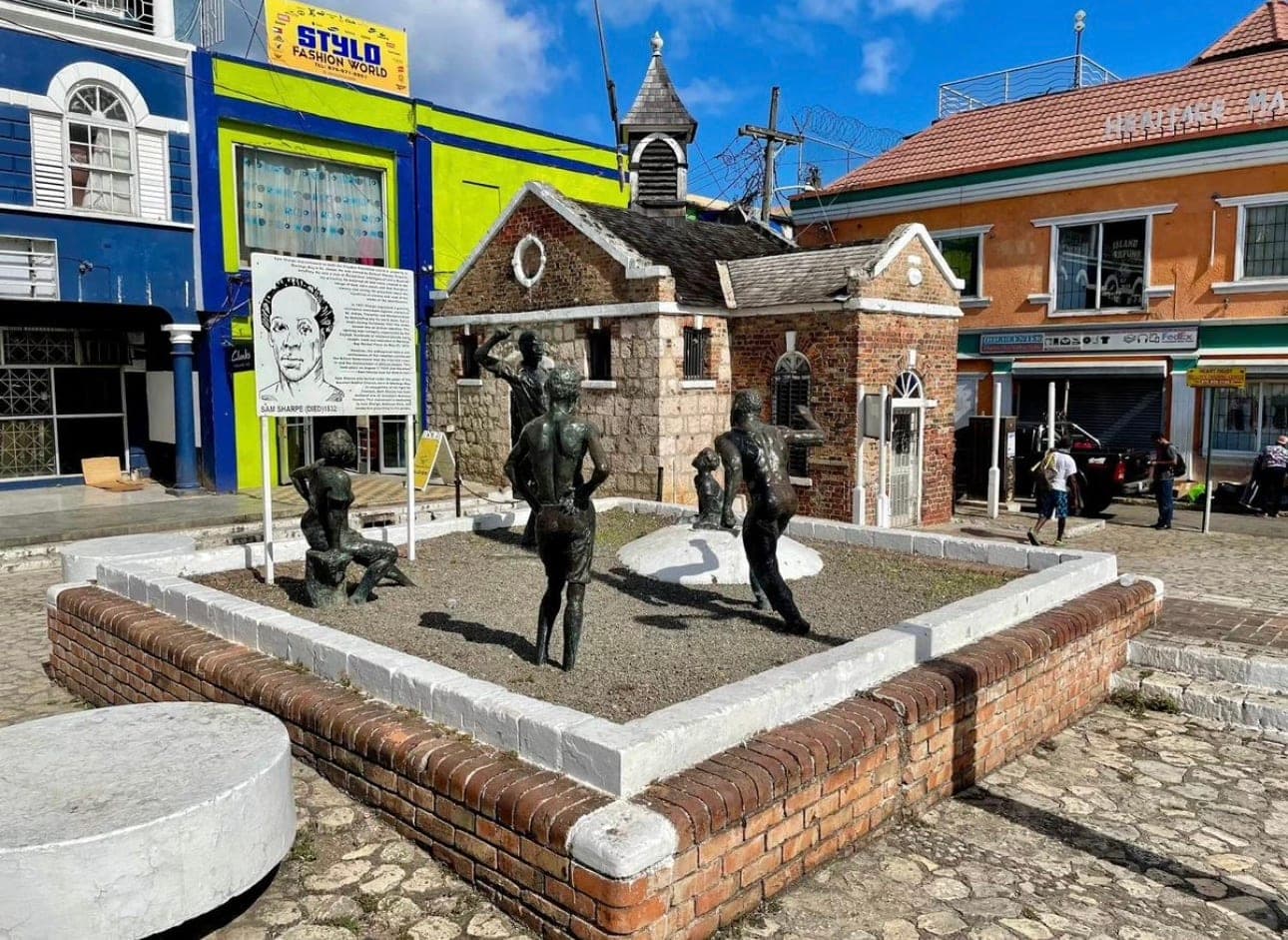
Stand in Sam Sharpe Square on a Tuesday afternoon and it is simply the middle of town — taxis, higglers, the heat coming off the concrete. It is also the place where the man it is named for was hanged, in May 1832, at the age of about thirty-one.
Samuel Sharpe was an enslaved man in Montego Bay and a deacon in the Baptist church, which is where he learned to speak to a crowd. He was literate, respected, and allowed to move between estates in a way most enslaved people were not. He used that freedom to organise.
His plan was not, at first, a war. Word had reached Jamaica that abolition was being argued in the British Parliament, and that the planters intended to resist it. Sharpe called for something closer to a general strike: after Christmas 1831, enslaved people on the estates around Montego Bay would refuse to return to the fields until they were paid for their labour.
It did not stay peaceful. On 27 December 1831 the trash houses at Kensington Estate were set alight, the signal spread across the hills, and what began as a withheld day's work became the largest uprising in Jamaica's history. Tens of thousands joined it across the western parishes. It is remembered as the Christmas Rebellion, and as the Baptist War, because of the chapels it moved through.
The response was merciless. The rebellion was put down within weeks; hundreds of enslaved people were killed in the fighting and hundreds more were executed afterwards, many of them in Montego Bay. Sharpe was tried and hanged in the parade ground in the centre of town. The words he is remembered by were recorded by a man who visited him in his cell.
What followed is why the square carries his name. The scale of the rebellion, and the brutality of the reprisals, were reported in Britain and strengthened the hand of the abolitionists. The Slavery Abolition Act passed the following year, in 1833. Full freedom came in 1838.
Sharpe was named a National Hero of Jamaica in 1975. His face is on the fifty-dollar note. And the square, the one everybody walks through without looking up, is the ground itself.
“I would rather die upon yonder gallows than live in slavery.”
Know this place better than we do?
Corrections welcome, and always credited. If you run a business in the story, claim your listing.
Add your business